Same-Day Delivery Solutions Across the USA
Same-day delivery has shifted from a premium add‑on to a core expectation for many customers across the USA. E‑commerce growth, changing consumer behavior, and advances in logistics technology have combined to create a landscape where “order today, get it today” is increasingly normal. This article explores how same‑day delivery works nationwide, who provides it, what technologies power it, and what businesses need to consider when implementing it.
What Same‑Day Delivery Really Means
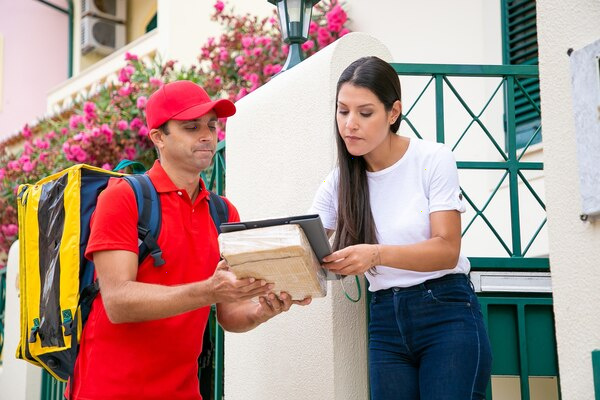
In the US market, “same‑day delivery” typically falls into three operational models:
- Scheduled same‑day
Customers order before a cut‑off time (for example, 12:00 p.m.) and receive their package by the end of the day (often 8–10 p.m.).
- On‑demand same‑day
Delivery occurs within a short time window after ordering—often 1–4 hours—common for groceries, pharmacy items, and urgent local deliveries.
- Deferred urgent shipping
Orders placed in the afternoon/evening may arrive early the next morning but are still marketed as a form of “same‑day/next‑morning” premium service, especially in B2B contexts.
The exact promise depends on distance, inventory location, and carrier capabilities.
Key Players in US Same‑Day Delivery
National Parcel Carriers
Traditional carriers have developed same‑day and “time‑definite” offerings:
- UPS Express Critical / UPS Same Day – Time‑sensitive, often B2B and high‑value (medical, aerospace, manufacturing parts). Coverage is broad but pricing is premium.
- FedEx SameDay – Air and ground options, including cross‑country same‑day via chartered flights for mission‑critical shipments.
- USPS – Historically had limited same‑day pilots; its strength is in next‑day coverage via Priority Mail Express rather than true nationwide same‑day.
These services are ideal when reliability and reach matter more than cost.
On‑Demand Delivery Platforms
App‑based platforms specialize in local same‑day and even sub‑hour delivery:
- DoorDash, Uber, Instacart, Shipt, Gopuff – Built around grocery and restaurant delivery, but increasingly used for retail, pharmacy, and convenience items.
- Roadie (a UPS company), Deliv‑style local couriers, and regional crowdsourced fleets – Focus on same‑day and last‑mile logistics for retailers and SMBs.
They provide API integrations, flexible capacity through gig drivers, and fast delivery within defined radiuses of urban and suburban centers.
Retailers and Marketplaces
Large retailers have become logistics providers in their own right:
- Amazon – Same‑day and even 1–2 hour delivery in dozens of metropolitan areas through micro‑fulfillment centers and a dedicated delivery network.
- Walmart, Target, Best Buy, Home Depot, CVS, Walgreens and others – Offer same‑day via in‑house fleets, curbside pickup, and partnerships with on‑demand platforms.
These companies leverage extensive store networks as local fulfillment nodes, turning brick‑and‑mortar locations into mini‑warehouses.
Regional and Local Couriers
In many metropolitan areas, local courier companies handle:
- Medical and lab specimens
- Legal and financial documents
- Specialty retail and B2B urgent parts
They often provide tailored SLAs, white‑glove services, and strong knowledge of local traffic and regulations.
How Same‑Day Delivery Works Operationally
1. Distributed Inventory and Micro‑Fulfillment
Delivering within hours is only possible when inventory is close to the customer. The main strategies:
- Multi‑node fulfillment networks – Several strategically located warehouses across the US covering different regions.
- Store‑as‑warehouse – Using retail stores as fulfillment points for local orders.
- Micro‑fulfillment centers (MFCs) – Smaller, highly automated facilities near dense population centers.
Businesses must decide which SKUs to stock where, balancing speed, demand, and carrying costs.
2. Smart Order Routing
Order management systems (OMS) and warehouse management systems (WMS) determine:
- Which location should ship the order (store vs DC vs MFC)
- Which carrier or courier should deliver it (based on cost, SLA, and capacity)
- Whether the order qualifies for same‑day (time of order, destination, inventory status)
Rule‑based and algorithmic routing help ensure the fastest and most cost‑effective option is chosen automatically.
3. Real‑Time Delivery Orchestration
For the last mile, platforms coordinate:
- Driver assignment and batching of orders
- Route optimization considering traffic, time windows, and vehicle capacity
- Real‑time tracking and status updates (picked up, on the way, delivered)
APIs connect merchants’ order systems to delivery networks, enabling automated booking and tracking without manual intervention.
4. Cut‑Off Times and Service Areas
Same‑day viability depends on:
- Cut‑off times – For example, “Order by 2 p.m. for same‑day delivery.”
- Service radius – Usually defined by distance or drive time from the fulfillment node (e.g., 10–30 miles).
- Zip code eligibility – Many merchants let customers check eligibility by entering their ZIP.
These parameters are tuned based on operational capacity and performance data.
Technology Enablers
Several technologies make same‑day delivery across the USA feasible:
- Route optimization and mapping – Dynamic routing solves complex vehicle routing problems in real time.
- Real‑time inventory visibility – Synchronization between online stores, warehouses, and brick‑and‑mortar locations prevents overselling.
- Demand forecasting and analytics – Predicting SKU‑level demand in micro‑regions supports smart stocking strategies.
- Driver apps and GPS tracking – Provide turn‑by‑turn navigation, proof of delivery (signatures, photos), and performance metrics.
- Customer communication tools – Automated SMS, email, and in‑app notifications for ETAs, delays, and delivery confirmation.
Together, these reduce uncertainty, lower costs, and improve the customer experience.
Cost Structure and Pricing Approaches
Same‑day delivery is more expensive to provide than traditional ground shipping due to:
- Short lead times for picking and packing
- Smaller batch sizes and less consolidation
- Higher labor and fuel costs per order
- Need for additional inventory points and safety stock
Common pricing strategies include:
- Flat fee (e.g., $9.99 for same‑day within eligible areas)
- Distance‑based (tiers by zone or mileage)
- Cart‑value thresholds (free same‑day above a certain order value)
- Subscription models (membership programs that include same‑day at reduced or no extra cost)
Optimizing the economic model often involves targeting same‑day to high‑margin products or orders.
Benefits for Businesses and Customers
For Customers
- Rapid gratification and reduced waiting time
- Better reliability for urgent needs (medicine, last‑minute gifts, replacement items)
- Greater choice of where and how to receive an order, often with tight time windows
For Businesses
- Higher conversion rates at checkout when fast shipping options are available
- Larger average order values when speed is tied to thresholds
- Competitive differentiation in crowded markets
- Greater use of physical stores as revenue‑generating fulfillment hubs
When executed well, same‑day can be both a revenue driver and a strategic loyalty tool.
Challenges and Constraints
Despite its growth, same‑day delivery across the USA faces several obstacles:
- Geographic dispersion – Rural and remote areas are significantly harder and costlier to serve within hours.
- Labor dependency – Many models rely on gig workers and face fluctuations in driver availability and service quality.
- Thin margins – High operating costs make profitability difficult without careful optimization.
- Operational complexity – Synchronizing inventory, orders, routes, and customer expectations adds systemic risk.
- Regulatory and compliance issues – Particularly in categories such as pharmaceuticals, alcohol, age‑restricted items, and sensitive data.
Businesses must deliberately design their same‑day programs to mitigate these issues rather than bolting them on haphazardly.
Sustainability Considerations
Same‑day delivery can increase emissions and congestion if poorly managed, but there are mitigation strategies:
- Route densification – Batch and cluster deliveries instead of offering immediate, one‑off trips for every order.
- Vehicle mix optimization – Electric vehicles, bikes, and cargo bikes in dense urban cores.
- Packaging efficiency – Right‑sized packaging reduces weight and volume.
- Demand shaping – Incentives for customers to select eco‑friendly time windows where routes are more efficient.
More companies are incorporating environmental metrics into delivery decisions and partner selection.
How Businesses Can Implement Same‑Day Delivery
For companies looking to roll out or improve same‑day coverage in the USA, a phased approach is typically effective:
- Assess demand and economics
- Identify product categories and regions with sufficient order volume and margins.
- Model expected costs vs. conversion and AOV uplift.
- Start with limited zones and SKUs
- Launch in 1–3 metropolitan areas with high density and demand.
- Limit same‑day to a curated assortment of fast‑moving, in‑stock items.
- Choose the right fulfillment model
- Use stores or local warehouses if available.
- Consider partnering with 3PLs that specialize in same‑day and micro‑fulfillment.
- Integrate with last‑mile providers
- Connect to on‑demand delivery platforms and/or regional couriers through APIs.
- Set clear SLAs and performance metrics (on‑time rate, damage rate, NPS).
- Optimize operations continuously
- Monitor KPIs: delivery time, cost per order, order density, customer satisfaction.
- Adjust cut‑off times, eligible zones, and pricing based on real‑world data.
- Communicate transparently with customers
- Present accurate delivery windows at checkout.
- Provide real‑time tracking and easy access to support for exceptions and issues.
This measured rollout reduces the risk of overpromising and under‑delivering.
The Future of Same‑Day Delivery in the USA
Several trends are likely to shape the next phase:
- More pervasive coverage – Expansion beyond major metros into secondary cities as networks densify.
- Increased automation – Use of robotics in micro‑fulfillment, automated sorting, and eventually more autonomous delivery vehicles in certain markets.
- Tighter integration with retail – Unified shopping experiences where customers can seamlessly choose pickup, scheduled delivery, or on‑demand options from the same interface.
- Personalization – Dynamically adjusting same‑day offers, pricing, and time slots based on individual customer value and history.
- Greater focus on profitability and sustainability – Emphasis on unit economics, route efficiency, and environmental impact.
Same‑day delivery across the USA is evolving from an experimental premium feature into a standard part of the logistics toolkit. For businesses, the challenge is no longer whether to offer fast delivery but how to design a same‑day solution that is operationally sound, financially viable, and aligned with customer expectations in their specific markets.